Pavan Sukhdev & Corporation 2020

Karl FitzgeraldMultimedia1 Comment

Renegade Economists 265

As broadcast on 3CR, Wed Dec 5th. Subscribe to the weekly podcast via this itunes link

Show Notes:
Corporation 2020: Groundbreaking economist Pavan Sukhdev discusses developments in ecosystem services accounting, the need for resource taxation and the push to make CEO’s lead on environmental change.

Listen to the interview

Photosynthesis, pollination and precipitation are ecosystem services to the economy that aren’t included in economic equations. We need to value these resources to ensure they are included in our core decision making analysis – economic opportunity costs. Elsewise they can easily be destroyed in the mad dash for economic rents in this age of increasing resource scarcity.

Pavan’s new book Corporation 2020 zeroes in on CEO’s as decision makers. Corporations account for 60% of global GDP and 70% of jobs. We have less than a decade to change to a low carbon economy and Pavan’s strategy is for CEO’s to lead the way.

We were particularly happy to have him on the show in light of our True Cost Economics forums (2006 & 2007) that discussed many of these issues.

As an aside, we thought it humorous the bookcase Pavan was standing infront of had 24 cubicles of books on psychology. There was only one cubicle for economics. Would our lives be happier if we had a fairer economic system?

References:

the TED talk by Pavan

“Resource taxation is the future and there’s no point obstructing the future”, said Mr Sukhdev, who is in Australia to give talks and promote his latest book, Corporation 2020: Transforming Business for Tomorrow’s World.

SEEA Environmental Accounting at the ABS

Ross Gittins on SEEA

Thanks to the Centre for Policy Development for organising the tour and interview.
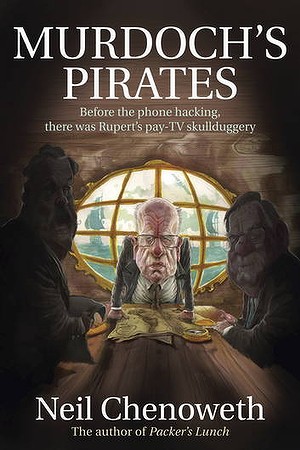
Neil Chenoweth on Obeid & Murdoch espionage

Karl FitzgeraldCommentaryLeave a Comment

Renegade Economists podcast #263

As recorded on 3CR, Wednesday Nov 21st, 2012.

Listen here

Obeid & Murdoch’s Corporate Espionage: One of Australia’s leading investigative journalists – Neil Chenoweth – is this week’s guest. Neil has just released his latest book, Murdoch’s Pirates, and is widely regarded as a driving force behind the Murdoch phone hacking story revealed earlier this year.

We start by focusing on the latest corruption issues in the NSW land game with the Eddie Obeid scandal. In the 2nd half we move onto Murdoch’s pirate TV hacking scandal – surely a huge story in times to come.

During the show I mention the pressures for privatisation could be avoided if the public was allowed to share in the windfall gains Obeid pursued with such deception. This can be done by Land Value Capture, which was hinted at in John Legge’s exciting piece on public transport funding this week. This mechanism is more widely discussed here.

When the Pay TV scandal broke, I wrote in Trusting the Murdocracy:
“The same Rupert Murdoch who was so threatened by the internet and the free provision of his news services found it fair practice to condone or create a corporate atmosphere where such espionage inherent in hacking his competitors encryption codes was acceptable. To then offer his competitor’s content for free to undermine revenues, enabling him to buy up these companies to entrench his monopoly simply beggars belief. Then he resorts to twitter to attack his critics as trying to defend their monopolies? ”

Harnessing Monopoly for the Common Good

Karl FitzgeraldPast EventsLeave a Comment

The Total Resource Rents of Australia – Report Release
Tuesday November 20th, 6:30pm
Presenter: Karl Fitzgerald
Venue: 1/27 Hardware Lane, Melbourne

Could the economic value of all forms of monopoly be capable of financing the three tiers of government?

This report will demonstrate how the economic power of monopoly is capable of just this.

Quantifying the naturally rising value of resources such as residential land, iron ore and water rights should be common knowledge in a genuine economic democracy. “How much has our commonwealth increased in value this year?” are the questions we’d like students to be discussing in High School.

The report also raises a spotlight on the economic power inherent in other forms of monopoly – privatised airports, cyber squatting, taxi and gambling licenses to name just a few.

The moral and ethical questions are significant. Are the owners of natural monopolies encouraging the level playing field we were so promised? How does the monopoly ownership of our electro magnetic spectrum impinge upon our democratic freedoms?

The audience will learn of the efficiency dividends that could be realised if economics rents were used to finance government. It will also discuss the number of government reports that have advocated the inevitable need for these reforms.

This report is based on Tony O’Brien’s landmark 1999 report The Total Resource Rents of Australia.

With $21 trillion hidden in tax havens, it is time future generations looked at a new operating system to encourage demographic equality and entrepreneurial reward within sustainable means.

Please join Karl Fitzgerald (Producer & Co-Director of Real Estate 4 Ransom) for a night of insight into the future of reform. RSVP to this gold coin event.

Mongolian Magic Millions

Karl FitzgeraldMultimediaLeave a Comment

Renegade Economists podcast 261

As broadcast on 3CR Wed Nov 8th, 2012

Mongolian Monopolies: We visit the world’s fastest growing economy to discuss the magic millions forumula of mining boom plus land game with journalist Michael Kohn

Listen here

Subscribe to the podcast via itunes

An excerpt from Michael’s article Property Boom in Mongolia:

An American private equity fund manager named Lee Cashell flew to Ulan Bator from Hong Kong 11 years ago and bought three Soviet-era apartments with US$30,000 he had borrowed from a friend.

He fixed them up, sold them for a profit and started a boutique real estate business.

Cashell quickly went from flipping apartments to building them. Today, his US$155 million firm, Asia Pacific Investment Partners, owns a cement factory and several apartment blocks with retail projects in the pipeline. He hopes to list his company on the Hong Kong exchange in the next 18 months.

His story is as much about entrepreneurship as Mongolia’s economic development and real estate boom. Property prices have doubled in the past five years.