The Earth’s Worth

Karl FitzgeraldCommentaryLeave a Comment

Creative Commons License photo credit: sigmaman

In Revenue Sharing – A Piece of the Pie John Cutfeet says:

I recently heard an Elder say that we, as the First Peoples, were given resources by the Creator from which we can make a living. He said, “God gave us resources to use from our lands. Our people did commercial fishing where we sold fish to make a living. We have the land and resources we can use instead of not doing anything with it.”

This message by the Elders has been consistent throughout the years and has been voiced repeatedly. When our forefathers engaged in the treaty-making process, they understood that they were agreeing to share the land and the benefits it provides with the newcomers.
Unfortunately, the text of the treaty does not reflect the discussions as remembered by the elders. They recall agreeing to share the lands and its resources for mutual benefit and not mass land surrender.

The shadows of the Copenhagen climate conference provide an opportune time to review our operating system and it’s pursuit of creating carbon permits for carbon speculators AKA carbon cowboys acting out as financial middlemen.

The short term mentality of quarterly dividend payments curtails the western CEO from thinking of future generations. Easy profits are delivered by the economic rents inherent in mining, land speculation or the ownership of any resource that is scarce. This gives modern economics a one-eyed view of the importance of scarce resources.

What justification do mainstream religious leaders give themselves late at night with the disjoint between the sentiment of their teachings and the outcomes of society as dictated by the economic system?

If nature’s wealth is shared amongst all, and not just the shareholders and privateers, then equality of opportunity is encouraged. Read this report on Valuing Common Assets and read more here for background.

Indigenous practice for thousands of years saw this work effectively and sustainably.

We believe that speculation on the licensed monopolies of scarce resources (also our DNA, copyright, fishing licenses) drives the rest of the economic juggernaut to cut corners. A coffee shop is forced to do this to keep up with the average 15.5% return over the last decade for land speculators here in Australia (where our land bubble still hasn’t popped).

Once speculators are signaled to stop their destructive practices of price inflation, then the cost of living returns to a more sustainable level. The implementation of a true cost economics system does this by penalising speculation and penalises pollution. Urban density, walkable communities and $1 train rides on an expanded network are all possible.

So too is more affordable housing, a decentralised push back out of our mega-cities and into the bush (where land values are lower and thus so are taxes) and even increased small business. The access to cheaper land with a simpler tax framework encourages the everyday person to follow their dreams into a start-up. The competition for labour heats up and because less is being paid for in rent, there is more to pay wages.

This all assists in undoing the forces that are driving the wealth gap. The chasm between private interests and the public good finds harmony when public works benefit all citizens equally, rather than delivering windfall gains for the lucky few who ‘own’ land.

A strong link with indigenous leaders will one day be made upon the common ground that the earth’s worth is for all and not just the privileged few. Can trust in market forces ever be rekindled? We like to think so.

The Law of Unintended Consequences

Karl FitzgeraldCommentaryLeave a Comment

Soon noon
Creative Commons License photo credit: nettopp

Andy Moore

Attracting the Green Vote

Sustainability is about preserving the Earth for future generations by living in balance with the natural capital provided to us for free by nature. Ecological economists are working hard to design direct policies – like resource taxes and cap and trade systems to address this issue. The trouble is they don’t work. You only need to look at the current shambles of the ETS to know that the paper it was written on would have been more effective at reducing pollution if left as a tree.

Henry George on the other hand didn’t conceive his economic theories in response to environmental concerns. However, it should come as no surprise that encouraging the efficient use of land promotes ecologically sound principles. It is highly likely that taxation of site values will indirectly conserve resources much more effectively than policies designed with that direct intention. I agree with Clifford Cobb who says “the best way to solve problems is by indirect means”.

But Georgist economics alone will not save our natural capital from depletion – Henry himself had no reason to see this as a problem in 19th century America, believing instead that the Earth could sustain a population of 100 billion. Therefore the issue of resource depletion must be considered. If Georgists can learn about limits from ecological economists and environmentalists can learn about achieving goals through indirect means – our policies could be implemented quietly, efficiently and very effectively by harnessing the power of the modern green vote.

History is littered with disastrous effects from the law of unintended consequences, but positive results can be achieved by exploiting the same force. Social and economic equity are indisputably the direct results of Georgism. The positive environmental effects are second and third tier consequences; further proof of the power in its application.

FHOG Disease Spreads to Fiji

Karl FitzgeraldCommentaryLeave a Comment

Creative Commons License photo credit: Just a Temporary Measure

Australia’s disastrous first home owners grant has spread in principle to both the US with an $8000 tax credit (rumoured to soon be ‘boosted’ to $15,000) and now to our Pacific cousins in Fiji with a handout.

Sure the American’s are giving a tax credit, ensuring that only those with enough savings can get into the property game, but have a read of this:

Experts Commend Fiji Government’s New Housing Plan

Suva, Fiji (AHN) – The Fiji Government’s initiative to put in place a housing assistance grant worth $10 million for the construction of new individual homes was applauded by economics and business experts.

According to the Prime Minister Commodore Voreqe Bainimarama, this housing assistance grant shall be available to those families or individuals who want to construct their first house and who meet the commercial bank loan serviceability requirements can substantially contribute towards the 20 percent deposit requirement but do not have enough funds to meet the total deposit requirements.

Each successful applicant will be given a maximum of $10,000 and that would mean that 1,000 families can benefit from this scheme, he said.

“Based on an average cost of $100,000 for a basic house, this grant scheme has the potential to generate $100 million into the economy,” Bainimarama said.

As we have repeated time and again, if everyone gets $10,000, then the price of land will go up at least $10,000. This is a subsidy for the sellers, not the buyers.

Let’s hope that not too many of Bainimarama’s family are in the real estate industry.

Read the frustrations of local blogger Fiji Freedom Fighter re under-utilised land and poor NGO policy. If only more NGO’s understood economics and the effect of any community improvements on the value of land. Ditto for our politicians and their well-heeled consultants.

Who are we really working for?

This Valuable Earth

Karl FitzgeraldCommentaryLeave a Comment

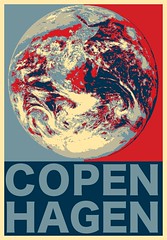
COPENHAGEN
Creative Commons License photo credit: marc kjerland

Renegade Economists Podcast 118

As broadcast on 3CR on 09/12/09
Subscribe to the podcast

Show Notes
This Valueable Earth: Gary Flomenhoft discusses his exciting new report quantifying the value of Vermont’s minerals, forestry, fisheries, internet, EMS & Land amongst many other resources. Arm yourself with these vital stats!

Valuing Common Assets Report – Get your $1972 citizen’s dividend here.

The 2004 Green Tax Shift report, chock full of stats and graphs

Tony O’brien’s Total Resource Rents: Australia

Valuing Common Assets in the media:
Radical Overhaul – An article on Gary’s presentation to the Blue Ribbon Tax Structure Commission (the day after our interview)
Resources for Rent?
Reclaim Vermont’s Resource Sovereignty

Verisign – monopolists of .com and .net

VeriSign has also faced some public scrutiny regarding its relationship with ICANN (Internet Corporation for Assigned Names and Numbers) and DNS. In September 2003, VeriSign introduced a service called Site Finder, which redirected Web browsers to a search service when users attempted to go to nonexistent .com or .net domain names.

– cyber squatting anyone?

New America Foundation’s work on the EMS

Music

Dj Spooky – Pax Per Fidem
Read More