The future of carbon trading

Karl FitzgeraldCommentaryLeave a Comment

SLF2013-renegades_nic_web

Renegade Economists Show #276

Listen to the show
Subscribe to the podcast

Recorded live at the Sustainable Living Festival in Melbourne this week Nic Francis Gilley CEO of Cool NRG discusses the markets role in the fight against global warming. Gilley’s company installs free energy efficient light globes in homes from Melbourne to Mexico, reducing carbons emissions by millions of tonnes. The company is paid by the sale of carbon permits earnt from these activities.

Gilley joins the program to discuss the future of market-based action and the carbon trading system. Australia will be joining the world’s carbon trading markets in 2015. Our government’s role will be to maintain legislation that forces polluters to pay, Gilley says.

His vision of the future might be disturbing to some, with the most extreme solutions to global warming not beyond his scope. There’s no doubt, though, that Gilley is getting things done in a environment hostile to radical change. Tune in to hear some intriguing ideas for the future.

Adding It Up: Environmental Accounting in Australia

Karl FitzgeraldCommentaryLeave a Comment

Renegade Economists Show #275

Listen to the show
Subscribe to the podcast

Following on from last weeks interview on ecosystem services valuation, Karl interviews Dr Michael Vardon. Dr Vardon is a special advisor to the Australian Bureau of Statistics on environmental accounting.

Dr Vardon introduces the System of Environmental – Economic Accounting (SEEA), which has been in development since 1993 at a standardised international level, but is now part of official research. In time this information will help us understand our net carbon balance and our relationship to scare natural resources. On the show Dr Vardon takes us through the environmental values we do and don’t account for presently, and where we’re going with the SEEA in Australia.

As a bonus, here’s Dr David Suzuki on the failings of economics to account for environmental value that’s sampled in the show.

The Next Economy – Capitalism 3.0

Karl FitzgeraldTrue Cost EconomicsLeave a Comment

Screen shot 2013-02-14 at 12.04.40 PM

For those interested in a vision of a sane economy, member K.D summarised her key learnings from Peter Barnes’ landmark 2007 book Capitalism 3.0. Acting on his beliefs, Peter kindly donated the book to the commons, allowing it to be downloaded (pdf). It can be purchased here. Most of these are direct transcriptions from the book.

CAPITALISM 3.0

A GUIDE TO RECLAIMING THE COMMONS, PETER BARNES

BOOK SUMMARY

My initial ruminations focused on climate change caused by human emissions of heat-trapping gases. Some analysts saw this as a “tragedy of the commons,” a concept popularized forty years ago by biologist Garrett Hardin. According to Hardin, people will always overuse a commons because it’s in their self-interest to do so. I saw the problem instead as a pair of tragedies: first a tragedy of the market, which has no way of curbing its own excesses, and second a tragedy of government, which fails to protect the atmosphere because polluting corporations are powerful and future generations don’t vote. This way of viewing the situation led to a hypothesis: if the commons is a victim of market and government failures, rather than the cause of its own destruction, the remedy might lie in strengthening the commons. But how might that be done?

Part 2 proposes a number of new property rights, birthrights, and institutions that would enlarge the commons sector in one way or another. I like to think that these proposals blend hope and realism. Among them are:
• A series of ecosystem trusts that protect air, water, forests and habitat;
• A mutual fund that pays dividends to all Americans—one person, one share;
• A trust fund that provides start-up capital to every child;
• A risk-sharing pool for health care that covers everyone;
• A national fund based on copyright fees that supports local arts;
• A limit on the amount of advertising.

THE COMMONS
= Nature, Community and Culture

In this book I use the commons as a generic term, like the market or the state. It refers to all the gifts we inherit or create together.

This notion of the commons designates a set of assets that have two characteristics: they’re all gifts, and they’re all shared. A gift is something we receive, as opposed to something we earn. A shared gift is one we receive as members of a community, as opposed to individually.
Examples of such gifts include air, water, ecosystems, languages, music, holidays, money, law, mathematics, parks, the Internet, and much more.

There’s another quality to assets in the commons: we have a joint obligation to preserve them. That’s because future generations will need them to live, and live well, just as we do. And our generation has no right to say, “These gifts end here.”

Assets in the commons are meant to be preserved regardless of their return to capital. Just as we receive them as shared gifts, so we have a duty to pass them on in at least the same condition as we received them. If we can add to their value, so much the better, but at a minimum we must not degrade them, and we certainly have no right to destroy them.

But there’s no inherent reason why commons can’t be managed as commons.
Read More

On Eco System Service Valuation

Karl FitzgeraldCommentaryLeave a Comment

Renegade Economists Show #274

Listen to the show
Subscribe to the podcast

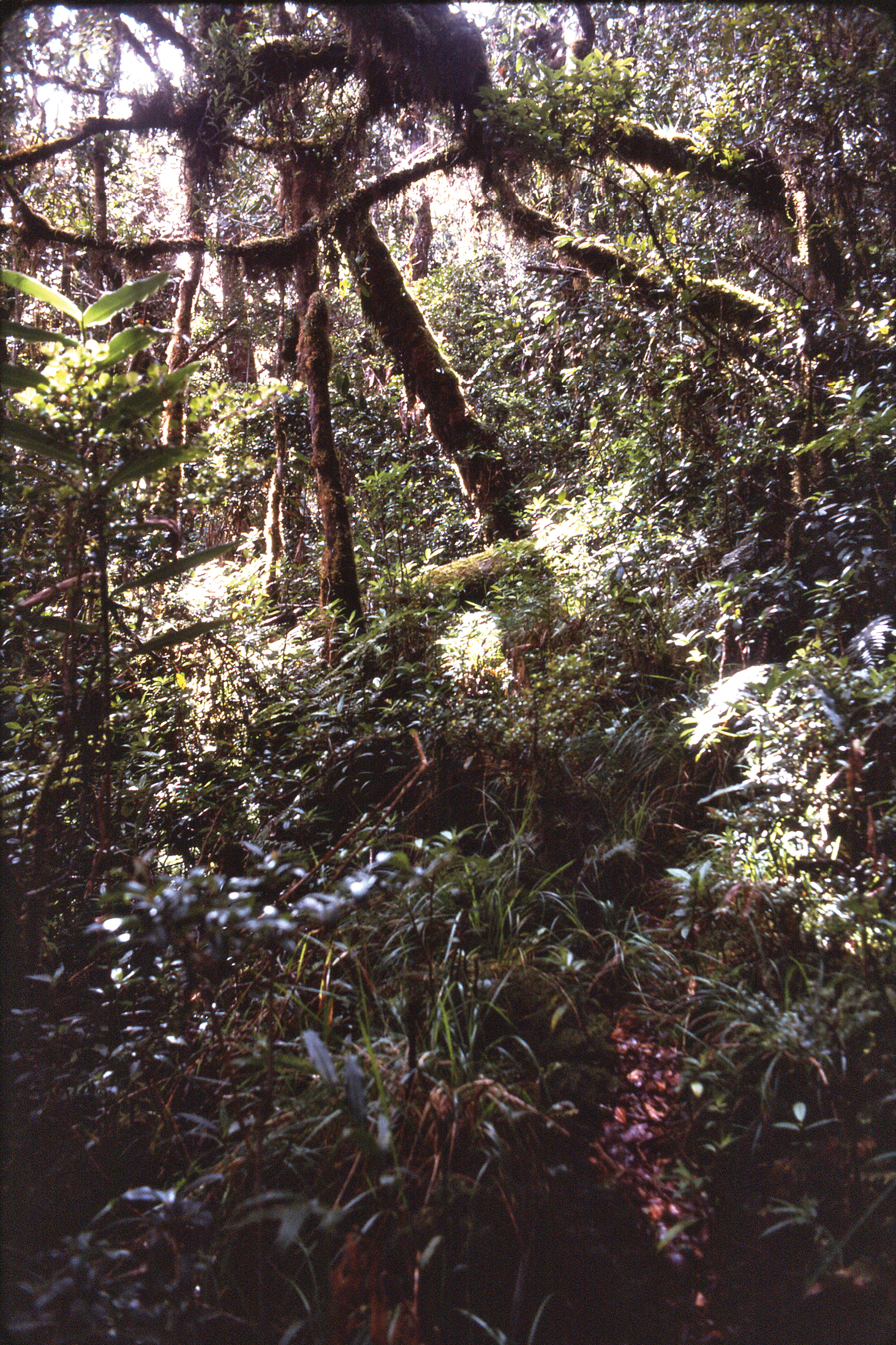
Moss forest in Finisterre Range, Papua New Guinea

Mining and logging make the big bucks, but what’s the true cost? This week Karl interviews Ian Curtis, of Curtis NRA, whose landmark work on Eco System Service Valuation has won a serious battle in Papua New Guinea. He combines ecology and economics to calculate the cost of environmental degradation on people and land.

In PNG resource rents are too low to cover the cost of the damage, but last year in a landmark judgement courts found in favour of the traditional owners of the land, using the environmental valuation method to award them $90 million (but, as always, there’s a hitch).

Karl and Ian discuss the methods used to determine the value of land, from the rainforest to the open grasslands. Curtis also discusses the valuation of 600,000 hectares of now defunct stock routes in New South Wales.

To hear more about land valuation in Australia and beyond, follow the link above for this week’s Renegade Economists.