Australian Property Market Connundrum

Karl FitzgeraldCommentary, MultimediaLeave a Comment

"Going Candid..."

Renegade Economists Show #279

Listen to the show
Subscribe to the podcast

It’s time for an overview of the current state of the residential property market in Australia. Two words can describe it, says Dr Gavin Putland, “suspended animation”. Interest rate reductions have not made any substantial difference to housing affordability. First home buyers are even less inclined to buy now than last year. This limited change has been facilitated by record-low interest rates.

Renters have no encouragement to buy, and nor should they, says David Collyer, while the costs of buying are so far from long term averages. Stamp Duty, says Dr. Putland, is simultaneously penalising home-buyers for wanting to move. A land tax would make this huge financial burden redundant.

The “Don’t Buy Now” campaign continues to grow, encouraging renters to avoid a lifetime of record mortgage debt. No other generation has been forced to pay 40% of their income on somewhere to live, let alone being told its ‘perfectly normal’.

“Land tax assists with affordability because it imposes a cost on holding the land and hence it imposes a cost on sitting on the land waiting for the price to rise,” says Dr Putland.

Meanwhile, another secret subsidy has been revealed for Victoria. Land inside the urban growth zone (but outside the Precinct Structure Plans) has been deemed agricultural by default, exempting land-owners from Land Taxes. David Collyer has uncovered this remarkable news and explains the consequences on the show.

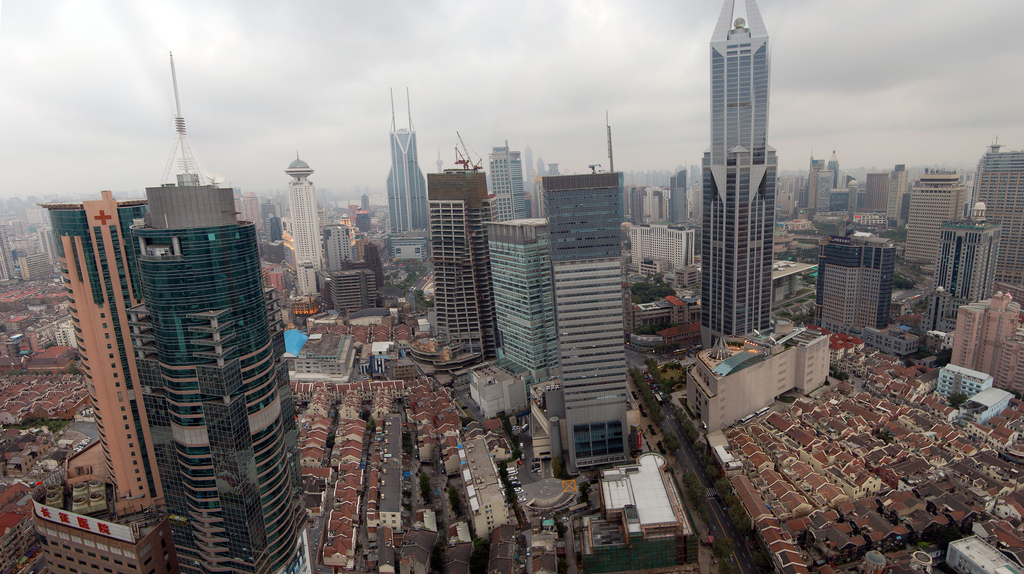
Locally, Melbourne is due to see another sky-scraper emerge. Dr Putland and Collyer discuss what this means for Victoria now and in the future.

Podcasters also can hear an assessment of the effect of Cyprus’ bailout conditions and alternatives.

photo by: Thomas Leuthard

Hudson – Looking at the economic changes ahead

Karl FitzgeraldCommentary, Hot Issues, InternationalLeave a Comment

Renegade Economists Show #279

Listen to the show
Subscribe to the podcast

Photo by Jakob Montrasio

This week on Renegade Economists we’re talking to Michael Hudson, economics research professor at the University of Missouri Kansas City, prolific writer and author of half a dozen books on the United State’s economy.

Michael’s been paying close attention to China as they prepare their speculative report on the next 30 years. Land taxation, a passion of ours at Earthsharing, is high on the agenda, according to Michael. The government are developing the infrastructure in the Western and Southern regions, and are looking to change the  taxation system to make the increasing value of the land pay for these developments. “It’s what followers of Hengry George used to dream about!” Micheal says.

We’ve already had a bit to say about Chinese reforms around property, such as the doubling deposit buyers need to purchase their second home from 30% to 60%.

Meanwhile the United States is seeing record corporate profits, but is it an illusion? These profits, Micheal Hudson says, are financial profits not based on industry or any tangible creation of value. The employment sector is still failing with an unemployment rate of 9%. Shops and malls are empty and half of the population of Detroit has left, once the fourth largest city in America.

If you haevn’t caught this once yet, here’s a great clip about Micheal Hudson, a fount of knowledge – this interview covers a lot of the hot economic topics for the year: peer-to-peer banking, Wall St, American taxation policy, German gold repatriation. Don’t miss it!

Transcription 06.03.2013:

Karl Fitzgerald (KF): It’s seems that the most exciting things happening around the planet are not happening in a democracy, they’re happening in China. The new Premier there Xi Jinping has a real reformist agenda.

Michael Hudson (MH): I think there’s a whole new generation coming in. I think they do things collectively in China, and then I was there a few years ago I was really happy to see how there’s a feeling of, uh, there are people in their 20s and 30s that they can really change society. That they really can get the reforms that they want to make it a really fair and prosperous society and I haven’t seen that degree of optimism in any other country. When I go to Russia for instance all the people could say is “Can you get me out of here? Can you get me to the United States?”. When I go to Germany they’re very down. But in China they’re very optimistic that they can change the whole structure of the system. And they just announced they’re publishing something later this month called “China in the next thirty years” where they have my article leading off, I’m told, and it’s about the need now to begin to tax land. The one thing that they haven’t done so far is address the tax problem.

What are you going to do to prevent Chinese putting all their money into real estate and just turning China away from a productive factory-based economy producing things into a speculative economy like the United States? They realise that’s what they’re trying to avoid. There’s been a shift in emphasis away from Shanghai which was sort of Thatcherite Marxism, if you can imagine that, towards Beijing and towards the west and there’s an attempt now to begin reviving or building up the western regions and the southern regions and they realise they don’t want this to become just a real estate promotion project, they want it to enrich the entire people and they want the tax basis basically to fall on the value of the land the government is building up by it’s enormous expenditure on transportation, it’s capital investment in roads and railroads, in new buildings. And so it’s what the followers of Henry George used to dream about! And in fact in China they’re aware of the fact that it goes back all the way to Sun Yat Sen, although they’re doing it they realise in the last hundred years there’s been a symbiosis between banking and real estate. And they certainly don’t want real estate to be bid up in prices by borrowed money and just meaning more debt and more debt for society as occurs in the western nations.

KF: Well they are opening up their financial sector there and there has been some concerns about these new developments. What do you see there?

MH: I don’t see them opening it up. There’s talk in America, the accusations by the Obama administrations that China has artificially been keeping its currency down and urging them to open their capital markets. But there’s so much liquidity in China, so many savings that if China did open there would be a huge outflow, of a diversification of investment outside of China, especially away from Chinese real estate into Western stocks and bonds, real estate, mining and Chinese currency – the RNB – would actually go down, rather than rise. So I don’t see their loosening these controls any time soon.
Read More

Lobbyocracy Lurks

Karl FitzgeraldCommentaryLeave a Comment

[ Landmark arrangement - 2 - ] The Mandarin Oriental, Tokyo @ The Nihonbashi Mitsui Tower

The lure of the bureaucrats golden pen tick is set to distort democratic processes as we read today in Minister’s $10,000 dinners:

Planning Minister Matthew Guy helped to approve applications made by Melbourne property developers who had attended secret dinners with him and the then chief of the Baillieu government’s urban renewal authority after paying a Liberal fund-raising arm $10,000 each.

Plausible deniability was ensured by the $10K donation falling under the $11,500 declaration threshold. However, Premier Baillieu had banned ministers attending fund-raising events.

Liberal Party Planning Ministers have a habit of golden pen ticks that land them in hot water. Former Planning Minister Ian Maclennan was behind the controversial Philip Island re-zoning row that sent Matthew Guy quiet last year.

It would be remiss not to mention the golden pen tick in light of the NSW ICAC Inquiry, where former Minister for Mineral Resources Eddie Obeid saw during his tenure the millions to be made in re-zoning land from rural to mining. Now tipped as the biggest corruption inquiry since the Rum Rebellion, we see that Liberal insiders have also been caught up in the scandal.

For those outside the game, we can only watch in wonder at the secret world of deception that continues to push ‘democracy’ as a healthy process for decision making. The 1% can hide in private dining rooms but must realise that the awakening of the people cannot be too far off.

Smooth sailing from here on?

Karl FitzgeraldArticlesLeave a Comment

Penetrating media

Renegade Economists Show #278

Listen to the show
Subscribe to the podcast

This week on Renegade Economists we’re talking to Phil Anderson, an economic forecaster of business cycles and director of the Economic Indicator Service. Phil’s an optimist and is expecting this cycle to be a strong one. Cheap energy and cheap money are the triggers for a new American future. We look into the crystal ball and discuss wide-ranging economic issues that we’ll be facing in the years to come.

Grand Prix for 50 years?

photo by: kevin dooley

Beyond Flat Earth Economics

Karl FitzgeraldArticlesLeave a Comment

next economy_s
A document prepared for the 2013 Sustainable Living Festival, where a talk on this topic was delivered. Download the PDF with poster designs (10MB).

We have just seven years until the 2020 deadline for significant pollution reductions. To speed this process up, the public must understand the drivers of business behaviour and how this impacts our lives. Economics is the framework for such analysis. The good news is a new framework for economic thinking recognises the earth as finite. At the heart of this change is an acceptance the economy is reliant on a healthy environment.

Unfortunately, lobbyocracy (the hypocrisy of democracy) has savaged such common sense. From land speculation, to extraordinary mining profits to water privatisation, government policy has fostered the commodification of nature. Whether it’s ‘location, location, location’ or ‘drill baby drill’, the owners of the earth chase easy profits from the naturally rising value of the planet. Economists have traditionally recognised that those who own the earth have an un-natural advantage over anyone running a business or earning a wage. The tax system was seen as the great leveler between those in the know and those on the go.

The moral grounding for such an outlook is a recognition that we are all borne onto the earth as equals. The scientific argument looks at externalities and the failure of economics to relate to reality. The economic basis is about efficiency. The Total Resource Rents of Australia report finds that prices are 23% higher than they should be. Those who own natural resources and licensed government monopolies generate 27% of GDP. But the economic textbooks state such economic rent is only 1 – 3% of the economy.

Imagine if you could earn $2 million per hour, even in your sleep? Gina Rinehart enjoys this sensation, despite the fact she has never delivered one ton of iron ore to the market. Each day we walk past land that has gone up thousands of dollars over the last year, despite no effort by the owner. Neo-classical economic theory has papered over these advantages as if there were enough places for us all.

A classic example is workers taking on a second job. They are taxed. But if you own a second property, you receive a tax subsidy via Negative Gearing (NG). These tax writeoffs have totaled $33.5 billion (1993 – 2010). Since mid 2010, national property prices have fallen 8.6% in real terms. Most negative gearers are average Australians – 800,000 of the 1.1 million NG’s earn less than $80,000 p.a. They can’t afford to throw money down the drain for much longer. Tick, tock ….

The favourable treatment of property speculation has seen the number of investors in the housing market increase from 12% in the mid 80’s to 34% in the last decade. Families and first home owners have been squeezed out.

The property development lobby has predicated affordable housing upon a ‘sprawl baby sprawl’ mentality. “We need more land supply” has been their incessant catch-cry. The government succumbed, re-zoning 97,000 hectares of land residential over the last decade. Equivalent to the size of Canberra, this could house over two million people.

Last year, with land prices falling, the development lobby pulled 30% of land supply from the market in the Shire of Mitchell. This was a sign of market power, attempting to curtail the fall in land prices. It demonstrated a breach of faith that few have questioned. The ability to offer ‘real estate 4 ransom’ continues around the world, despite the role the global property bubble played in blowing the world economy apart.

Power is further compounded by the biased information one bases the largest financial decision of their lives on – housing. Earthsharing Australia has conducted a study of ‘Speculative Vacancies’ for six years.

Our findings are generally three times higher than the REIV’s more widely publicised housing vacancy rate. This is because we include investment properties held empty in lieu of capital gains. Many are aware of one or two vacant properties in their neighborhood. These add up to 90,000 empty houses in Melbourne. This study conservatively ignores the land banks making up the 97,000 hectares of sprawl. Vacant homes -> more sprawl -> more pollution. Higher rents mean less for organics.

In short, the Next Economy must encourage a ‘steady state’ of natural resource management. The raping and pillaging of planet earth must end. An Earth Rights Democracy supports life by respecting the economy as a subset of the environment.

High economic growth rates can be wound back when those earning millions in their sleep are brought back a peg with tax reform. Society then no longer has to pedal so fast to keep up.

Society’s debt overhead will reduce. With land prices accounting for 65 – 70% of a typical mortgage, lower land prices will result from less speculation. Added flexibility and reduced work hours then become an option.

Business can be attracted by removing most of the current 126 taxes, and replacing this burden with a few charges on the economic rents that monopolists earn in their sleep.

Land Value Tax is the lynchpin, deterring property speculation and rewarding entrepreneurs. Self financing public transport then becomes possible. Tax havens are written off. Urban density and walkable communities are natural flow ons. Increasing Resource Rents on precious resources encourages green industry. By taxing away more of the ‘brown’ profits, our best and brightest will look to more sustainable industries. There is no economic justification for privatisation – natural monopolies belong in public hands. An enhanced Carbon Tax will see the pricing mechanism signal with urgency the permafrost challenged future. The valuation of eco system services is another positive development to support.

By changing our philosophical outlook on how we finance government, the privatisation of nature will no longer be a priority. We can become custodians rather than consumers of our dear planet.

3 Things to do:

Watch Real Estate 4 Ransom
Take a free trial subscription to our 108 year old Progress Magazine
Listen to the Renegade Economists, 5.30pm Wednesdays (podcast)