Melanesian Land Issues interview

Karl FitzgeraldCommentary, MultimediaLeave a Comment

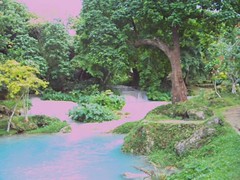
Vanuatu waterfall 3
Creative Commons License photo credit: M0les

Renegade Economists podcast

Joel Simo from the Melanesian Land Defence Group visited Australia recently via an Aid Watch.

Listen to his interview on the Renegades here…

In discussion with Green Left Weekly Joel says:

Customary land title represents the majority of land tenure in Fiji and Vanuatu and provides locals with food security.

This security provides certainty in times of economic downturn. MILDA argues that during the global financial crisis of 2009, very few people in these communities went without food or housing because of their access to traditional land.

Sukot told GLW: “During the economic crisis, it was very difficult for people in the cash economy. In the traditional economy, everything is very much dependent on land.

“People are able to provide basics for themselves even in economic crisis. The traditional economy is about sharing. This is different to the economy in the US, where the economy is based on selling.

Music

The Shepherd Island dancers were recorded at the 2008 Shepherd Alliance Party’s National Congress.

Petition for Affordability

Karl FitzgeraldCampaigns5 Comments

alltheyneed

The Rudd Government has reviewed the tax system.

The Henry Review came out strongly in favour of capturing economic rents for the common good. Read our analysis of the report here and here.

The Rudd Government has written off any serious reforms to issues relevant to housing affordability.

Why tax $285bn from people daring to work but only capture $40bn of the earth’s ever increasing value (scarcity rents)? Thus the wealth divide, small business desecration and rampant short-termism dominate our decisions.

Now is the time to send a clear message to the Rudd Labor Government that the balance needs to change.

We need to build pressure on the Rudd Government – please sign our petition!

Sign our petition

Read the petition preamble

Further reading

Diary of an Economics & Finance Student

Karl FitzgeraldCommentaryLeave a Comment

A new series on life as an Eco Fin student.tohmprof

Tohm Curtis

Week #1 Welcome to the School of Thumbs:

From the outset, what strikes me most is the recurring battle between standardisation & scepticism as befits education.

Most of education is about standardisation, and the ‘Great Intellectual Fraud’ of the Bell Curve. VCE/HSC/SATs are all about normally distributing a whole bunch of bright young minds over a bell curve, Higher Education is no less obsessed.

In a way, standardisation makes sense – it may well be good to have someone who knows every nuance of economic theory being hired by a bank and told ‘and here’s your computer’ and the graduate says ‘what’s a computer?’ There are just certain standards that have to be met for the University to do right by students and potential employers (including ourselves).

But there’s almost no room for scepticism, hence the ‘School of Thumbs’ being an apt moniker. It’s week one I know. Already I have one clear cut advantage in differentiating myself from your ‘standard’ Economics & Finance Graduate. Having already completed a Marketing degree, I would never ever make an assumption that Happiness is a function of Consumption.

It’s embarrassing to see a subject being taught like this. Marketing is generally derided for its success (even though the amount of success it achieves is dismal). At least it expresses an adequate level of epistemic humility when it is being taught. Marketing 101 kicks off like this:

‘We don’t know what is going on in an individuals mind, or what makes them happy. We call it a “consumers black box”, that’s what we are trying to find out.’

Economics is derided for its dismal failure, but in practice is oblivious to its own epistemic arrogance:

‘We assume people are rational utility maximisers (‘utility’ means happiness) and utility is a function of consumption, and consumption is a function of wealth. So the higher the GDP, the better… okay onto the science!’

I will never accept that people are ‘rational’, but I could accept that it is a good idea to build economic incentives where rational behaviour wins. It’s these ‘rules of thumb’ that the ‘science’ is built on that seem most pressing right now.

P.S. To those who like to rail against ‘the man’ or alternatively (and in my view more accurately) ‘the system’ you may be interested to know that 2/4 of my subjects mention ‘Land’ distinctly in their ‘factors of production’ though, there isn’t much discussion of the implications of this.

Pacific Resource Issues

Karl FitzgeraldCommentaryLeave a Comment

Manuro_sales_w

Read this innovative Helo Magazine interview. As a crisis journalism magazine, we were interviewed via a skype roundtable chat session:

Part of the intro states:

Can Pacific peoples bridge the world’s chasm between understanding cause and effect of climate change as well as coconut colonialism? Paradise, blue water, blue skies, abundant marine life, smiling faces, bible harmonies, simple lives, and resorts for cashed-up suburbanites. Or abject poverty, menacing kava stares, razor wire, machete-wielding youth, laplap dictatorships, tribal violence and raskol gangs running amok.

We jump into the interview:

Karl: My answer is to use the language of the corridors of power to fight back:  Use economic lingo to protect the earth, the community. Also, foreign aid has to be carefully looked at. Throughout Melanesia, aid has built ring roads around islands and new wharfs so the Multi-National Corporation’s (MNC’s) can rip out the resources quickly. Thirteen such projects by the Millennium Development Corp in Vanuatu. [For example] the ring road is almost finished on the main island of Efate.

Daniel J Gerstle, HELO Editor:  Forgive me, but given that foreign aid development may need to be done with more fairness, particularly in terms of MNC, does it really follow that you consider those ring roads and development unhelpful to the indigenous people in other ways, in terms of infrastructure, healthcare logistics, and markets?

Karl: More resource-based greed is showing through in the carbon cowboys scouring Papua New Guinea (PNG), and I bet other Pacifica islands. Check the comments re: Kirk Roberts.

The roads do improve life in the short run—less dust for local communities, quicker travel times – are dwarfed by the motivations these improved services provide to land sharks. Land becomes hugely valuable when you can fly into an airstrip in the north of Efate, one of the 13 infrastructure projects being built in Vanuatu, and zip off to the coastal mansion you have. All with little interaction with the locals, missing the urban drift in Vila. When this happens the local fisheries are fenced off by these essentially gated communities and the locals can no longer live off the land.

They have to head into town to work for the man. This form of dispossession has racked all developing countries where land scarcity delivers more workers to the smokestack MNC’s, and thus cheap labour. Check out the land speculators paradise: They have the cheek to call it barrier beach! To turn it into a marketing ploy when the locals can’t fish there no more!!! This site is in Santo, the 2nd biggest island in Vanuatu. 

Elite property investors are attracted to this slick site. Check it out and invest with a click of a button, with no thought of the impact on the local community. The Washington consensus has been aiming for this, for the flexibility of capital to swoop into a country and buy up a prime location, sell it a year later to make a killing. This is happening to all of the world’s most beautiful areas, particularly those like in the pacific where private land title is barely thirty years old.

Read more at HELO

The Communication in Commons

Karl FitzgeraldCommentaryLeave a Comment

Creative Commons License photo credit: NomadicLass

Renegade Economists Podcast 131

As broadcast on Wed March 10th, 2010 on 3CR
Subscribe to the podcast

Show Notes:
The Communication in Commons: Natalie Pang, Visiting Research Fellow, Nanyang Technology Co Uni (Singapore) discusses the evolution of the digital commons and what access issues we must be aware of.

Read more of her excellent work:
Wiki on the Knowledge Commons
On Bounded Rationality
Thesis

On Nauru (re DJ Spooky interview last week):
6 Principles for Resource Wealthy countries:

  1. Transparency – all royalty revenues must be documented either on a public website, and/ or on a Council noticeboard in the city square etc.
  2. A Permanent Trust Fund must be set up, following the same rules of transparency. The Alaska Permanent Trust Fund is the benchmark, where only the interest earnt is paid out as a Citizen’s Dividend.
  3. Participatory Democracy – all citizens vote on their priorities for proposed budgetary expenditures
  4. An environmental bond of $1million must be placed in a holding trust on condition that certain environmental standards are met throughout the operation and at the closure of the mine.
  5. Royalties – charged at a minimum of 30% at the ‘farm gate’ price (30% of the market value as it leaves the mine/ farm). No fixed price to be agreed upon in contractual negotiations.
  6. Beware of the resource wealth cascading into higher land prices (and thus mortgaged costs AKA bank profits). This brings into play the bigger issue of genuine land reform.

Music

Suzanne Kraft – Lovely
Entertainment for the Braindead – Pirates
Misanthrop – Commercialism