Henry Review & Mining Magnates: Please Note ‘Commonwealth’

Karl FitzgeraldCommentary1 Comment

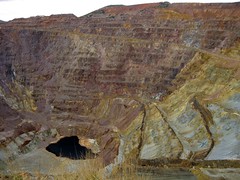
Bisbee - Copper mine / Lavender Pit
Creative Commons License photo credit: s_mestdagh

The gloves are off in the battle between the people and the mining magnates.

Today Swan admitted the 40% Resource Super Profit tax is not set in stone. This was code for ‘come buy me a coffee and let’s see what we can do about it’.

“We’ve outlined the design of the tax, we’ve said within the design of the tax we’re happy to sit down and talk about all of the transitional arrangements.”


With state royalties still to be paid, the Fed – State tradeoff in moving to one resource rent system will in the meantime see some churning in the tax refunds miners in participating states will endure. This opens the negotiating door for the miners.

But will the RSPT tax the miners out of existence?

It can’t possibly do this because the RSPT is based on profits. This allows mining companies and their CEO’s to maintain their bonuses. This deftly meets the ‘political’ in political economy.

With the growth in mining investment in W.A (a royalty rate of 7%) versus S.Australia’s 3.5%, there has been little discernible difference. The higher royalty rate hasn’t scared off investment. Why? Because miners understand their business is much more profitable than mass manufacturing of cars for example.

Scarcity dominates this decision. Natural resources are scarce and so with a Chinese led boom, miners are sure to profit. An RSPT is a way to re-balance the advantage mining companies have with their scarce resource versus car manufacturers, who produce a non-scarce resource.

Regarding China, a Resource Rents system is an assertion of sovereignty (now tagged ‘sovereign risk’ for mining investors). Kevin Rudd reminds us of our sovereignty here: talking up the value of our common-wealth (if only he remembered who his seat is named after and why):

Prime Minister Kevin Rudd said the redistribution of wealth was justified and long overdue, adding that much of the income generated by mining the resources which were owned by the Australian people went offshore.

“Over the last decade the mining companies generated $80 billion in higher profits. At the same time, governments on behalf of the Australian people, received only an additional $9 billion,” Mr Rudd told ABC Radio.

“BHP is 40 per cent foreign owned, Rio Tinto is more than 70 per cent foreign owned. That means these massively increased profits … built on Australian resources are mostly, in fact going overseas.”

Dear Mr Magnate, please note the term Commonwealth!

WIL Surprisingly Accurate

Karl FitzgeraldCommentaryLeave a Comment

Shades of Aerosols
Creative Commons License photo credit: NASA Goddard Photo and Video

Tohm Curtis

Week #5 – Diary of Eco Finance student

Mid semester break rolls in and Group Assignments begin. Group assignments are one of those marketable nightmares that are the direct result of Work Integrated Learning (WIL). It is one of the many popular ways Higher Education tries to simulate employment to make people more employable.

For those disputing whether Group Assignments are a new thing, let me clarify: All pervasive group assignments are a new thing. A largely mathematical/statistics based assignment was traditionally done by an individual. Now it is given to 5.

While I’ve always criticized Group Assignments as “enough work for 5 people, done by 1.” I find it hard to make a case against them, given the objectives of WIL.

Grossly unfair, inequitable and stressful they do accurately reflect an office environment. That is an individual is recruited into a unit that is to all extents and purposes an unknown to them, much like being randomly assigned to a group of students.

Pareto applies in the office as it does in Group assignments. 80% of the work will be done by 20% of the group. For a group of 5 people this means 1 person. Which is how group assignments generally fall out.

All that’s missing is the aspect of management. In Australia’s culture of ‘working’ managers (people who do the work of the employees, rather than managing the employees), group assignments are close enough. But the ‘rookie’ manager mistake in group assignments is to delegate work to a dead-weight group member.

In the working world you could actually fire this deadweight loss (though generally managers don’t because they either feel more loyalty to the employee/friend than the firm’s customers or it could be politically unpopular). You can’t in a group assignment. Sure you can give them 0% credit, if they sign off on it, but this rarely happens.

No the status-quo is to drag the deadweight along for the glory.

If as a student you want to test out your managerial talent though, you can actually try and delegate. Usually the work is done by one person by default, they are simply the most risk averse or impatient and plough ahead before a group can actually meet.

Few students (and employees) have the maturity to realize there is more reward in mastering group assignments through trial and error than the short run reward of good marks in that particular subject.

Sounds like management to me! Alas, just because the reflection of reality is accurate doesn’t mean it’s good. Universities are supposed to be the cutting edge, and thus should be rising above the unpleasant realities.

CPRS – Good Riddance

Karl FitzgeraldCommentary4 Comments

Creative Commons License photo credit: Martyn Hutchby

I wrote this awhile back and never sent it into the ether. Now that Rudd has put the CPRS on the backburner until 2013 (pls bring in the Carbon Tax asap), let’s have a look at why so many were against it.

CPRS= Corporate Polluters Runaway Subsidy

With the heat on the CPRS we shine the spotlight on a hidden side to the debate – the unlimited importation of international carbon permits and the role exchange rates will play.

Unlimited importation (CPRS white paper – Chapter 11, p10) implies a reliance on stable economies with a steady exchange rate. However, if a country has a hot property market and raises interest rates, this will bump up the exchange rate, subsidising the value of imported carbon permits.

If a developing country pushes interest rates down to stimulate a depressed economy, this leads to cheaper exports and thus cheap carbon due to the resultant low exchange rate. This pushes down carbon prices in Australia, rewarding polluters over green industry.

Reports of miners buying up forests in remote corners of the globe for these purposes are growing. Lets say a prayer for the traditional owners of PNG and other Pacific Island forests. Don’t sell out to speculative planet f-c*ers!

Another case in point is a poor administration in a developing country. If their economic policy does little to inspire confidence, foreign investors will sell out and push down the exchange rate. Readers of John Perkin’s ‘The Economic Hitman’ will be joining the dots towards the incentive for companies to aid and abet this process. Should polluters be encouraged with this sort of opportunity to undermine a nation’s sovereignty?

The big picture danger is that sacrosanct speculators in the housing industry will in effect reward polluters. How? Under current economic policy, the next housing bubble will see interest rates rise, pushing up exchange rates and thus subsidising imports. Land speculation will thus make carbon prices more volatile, which in return will make carbon speculators wealthier.

With the US the world’s reserve currency, every time we buy something with US dollars, we will in effect be subsidising US polluters. The high value of the US dollar will mean that they can purchase carbon at discount rates. In effect, this means that yet again the US, the world’s biggest historic polluter, has a massive advantage.

The weakness of government policy that allows a boom-bust two dimensional economic framework to continue unabated will undermine the CPRS. Current economic winds see that we are set for at least 5 years of low growth/ recessionary forces, meaning low demand for goods, lower demand for permits and thus low carbon prices.

These problems overlook the role merchant banks will play as the middlemen in many of these trades. The commissions they will earn automatically buys their support for the ETS over a loophole free carbon tax. What is to stop polluters playing the market, buying carbon permits off the vulnerable early in the period, then selling them high and using this profit to offset any carbon costs the CPRS claims?

A holding charge within the secondary carbon market would deter such activity. A holding charge on all natural resources would stymie the speculative largesse that has dug this GFC rabbit hole and give us the economic flexibility to make the best of Paul Gilmour’s scream crash boom.

A carbon tax please!

Week #4: Cultural Context

Karl FitzgeraldCommentaryLeave a Comment

aloe
Creative Commons License photo credit: Genista

Tohm Curtis

Sorry a little long this week, but it’s complicated.

An amusing thing happened in today’s lecture, my lecturer apologised. Not to me, but to the student that emailed him in the previous week asking ‘How many decimal places do we need to calculate to?’

By the lecturer’s account he responded ‘We don’t really care, the important thing is that you demonstrate your workings and thinking and understand WHAT to do, not how many decimal places.’ Apparently this wasn’t a sufficient answer, which resulted into a prolonged exchange of heated emails insisting on the number of decimal places vs. the understanding what the subject is about.

Eventually (again according to the lecturer’s narrative) he relented and told the student to ‘place it to 10 decimal places.’ Which apparently made the student very happy and he went away.

I told you that so I could talk about this: Economics and Finance student population is dominated by High Context Cultures.

High Context Cultures emphasise the Group over the Individual. Being right or wrong thus fades in comparison to being with the majority. High context cultures are generally patriarchal, vertical in organisation and emphasise filial piety, precedent and compliance.

Hence the student thinking the number of decimal places was somehow important.

Its pure speculation on my part (the sheer number of students from High Context Cultures make it probable) but I suspect they stressed over the fact because at some point in their student career they were penalised for using 2 decimal places instead of 4. And probably not for any good reason, but simply because that’s the way the teacher told them (or didn’t, just expected) it to be done.

I can’t say for sure. What I can say for sure, is that the lack of scepticism from the high context culture students (learning is all in the context of passing assessment, not necessarily rendering any useful service to a client one day) can lead to them dogmatically replicating errors that were taught to them via Neoclassical Economics. Just think that they may well be running the Central Banks of our major trading partners one day.

On balance though, at least High Context Cultures are getting their Education from Lecturers from Low Context Cultures. This can at least promote an alternate approach to learning for them.

Alas I had a different lecturer make a rudimentary error converting a fraction to a decimal. (They changed ½ to 0.2 between lines) I didn’t honestly believe she was that stupid, and thus a relatively harmless mistake, but at each elbow of me was a student dogmatically taking the notes like dictation. It could cause a speedhump to revising before their exams when they try to mechanically reproduce it.

I have some mathematical ‘sticklers’ I inherited from my high school teachers, like 1/3 is an actual value, where 0.33 is not 1/3 so I prefer to leave my numbers expressed as fractions, and ‘pi’ as ‘pi’ and so fourth. A lot of simple but stupid errors occur when switching between fractions and decimals. So I asked my teacher if we could leave our answers expressed as fractions, ‘e’, ‘pi’ etc. and still get full marks. The answer from this lecturer ‘No you have to put it into fractions to get full marks’ when I asked ‘Why?’ the answer was ‘that’s just how we do it.’

Can you guess which lecturer takes Economics and which lecturer takes Finance?

One Handed Housing Supply

Karl FitzgeraldArticles, Hot Issues7 Comments

Daily Devotions Part-1
Creative Commons License photo credit: Ian Sane

On the one hand, the market delivers the best for the least cost.
But on the other hand…. few are willing to call it as it is.

Yesterday’s National Housing Supply Report used coded language to hint at a ‘possible over-supply of housing’ due to housing investor tax breaks (p50).

However the usual suspects were missing from analysis when commenting on the role of vacancies:

Specific purposes include vacant stock awaiting sale, demolition or replacement, and holiday homes.

“Awaiting sale”. How very polite! People are screaming for housing and this is the best the nations peak body on housing supply can come up with?

Census data was used to show 830,374 properties as ‘awaiting sale’ or as holiday homes.

The said analysis focused on ABS statistics, which don’t include vacant land. This figure could easily be doubled if the nation’s residentially zoned land banks were included.

To bring the rental vacancy rate back to 3% – the rental market equilibrium, it is stated on p87 that:

The Council estimates that an additional 26,000 vacant private rental dwellings, mainly in New South Wales and Victoria, would be required in 2008.

We identified 14,149 here in Melbourne in a survey covering just 44% of Melbourne’s housing stock.

The ubiquitous Productivity Commission was quoted regarding the changing of the capital gains tax:

… has added to the recent housing price boom by encouraging investors to reduce current income in favour of longer term capital gains.

Only 830,000 vacant properties….but yet there is a possible shortfall of 200,000 dwellings by 2026???

And over at Rupert Murdoch’s Australian, Housing Shortfall Locking Out Thousands, the usual lines are run:

In a carefully worded criticism of the tax system, the report said the rules were skewed towards home buyers and mum and dad landlords at the expense of investors to build more medium-density housing for the future.

Medium density is mentioned twice in the report but from what i can see never is there a carefully worded mention along these lines.

Lower yields are of course mentioned. Is that why housing supply is dropping? What is the other hand saying? Shhhh…..

That’s what happens when you have a land boom. The pursuit of capital gains ensures that rental yields drop (slowly increasing rental income compared to Melbourne’s Dec 09 $70,000 jump in land prices).

In the final pages (p176), the report states:

In 2008, Port Hedland had a capital growth rate for property as at March 2008 of over 37 per cent according to Residex statistics.

Rising incomes and the Law of Rent demands that landlord’s can demand higher rents, as miners have the capacity to pay. It’s either that or go live in a shipping container house in 45 degree temperatures.

The Age’s Jason Dowling states:

The report also noted a large proportion of Australian homes were empty. It found one in 10 homes were unoccupied and that a quarter of these were holiday homes.

If one quarter of all vacancies are holiday homes (a mysterious stat we have been yearning for), this implies that 7.5% of Australia’s stock are speculative vacancies.

The pursuit of justice demands that we calculate the supply of speculative vacancies. Why didn’t the National Housing Supply Council? What was this ‘committee’ set up to do? (Fair enough they do say they will next time…when the bubble has popped)

That total is 622,781 properties.

622,781 speculative vacancies are holding the market to ransom, demanding their capital gain.

To emphasise, that is 3 times the supposed under-supply predicted in the far future of 2026.

To re-re-emphasise, these speculative vacancies could add 350% more to supply than was needed in 2008.

Until housing is seen as a human right rather than a speculative kite, the housing supply analysis will always have one hand behind its back.

Will Ken Henry have the ticker to recommend that higher and flatter land taxes replace payroll, halve income taxes and fund the abolition of the regressive GST? That is what is needed to restore the Great Aussie Dream.