Jim Hansen on Carbon Tax

Karl FitzgeraldCommentaryLeave a Comment

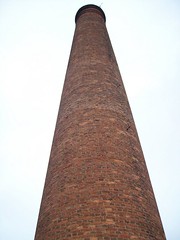
Majestuosa hacia el cielo
Creative Commons License photo credit: Fotos de Carrio

Our repeated calls for a carbon tax have been heeded by none other than NASA’s Climate Change expert Jim Hansen:
‘We have only four years left to act on climate change – America has to lead’:

In particular, the idea of continuing with “cap-and-trade” schemes, which allow countries to trade allowances and permits for emitting carbon dioxide, must now be scrapped, he insisted. Such schemes, encouraged by the Kyoto climate treaty, were simply “weak tea” and did not work. “The United States did not sign Kyoto, yet its emissions are not that different from the countries that did sign it.”

Thus plans to include carbon trading schemes in talks about future climate agreements were a desperate error, he said. “It’s just greenwash. I would rather the forthcoming Copenhagen climate talks fail than we agree to a bad deal,” Hansen said.

Only a carbon tax, agreed by the west and then imposed on the rest of the world through political pressure and trade tariffs, would succeed in the now-desperate task of stopping the rise of emissions, he argued. This tax would be imposed on oil corporations and gas companies and would specifically raise the prices of fuels across the globe, making their use less attractive. In addition, the mining of coal – by far the worst emitter of carbon dioxide – would be phased out entirely along with coal-burning power plants which he called factories of death.

Will that be enough to fund the new train lines we need or encourage the urban density we so require? Look deeper


Renegade Economists Podcast 71

Karl FitzgeraldCommentaryLeave a Comment


Creative Commons License photo credit: D&J Huber

The Melting Social Contract:

This show wades through recent economic trends, explaining why the boom bust bubble occurs and how this effects our ability to act as normal, respectable human beings. Also the Holocaust in Gaza and how desperate students have become to avoid paying fees.

Show Notes

  • South Pole summer
  • Why Economic Growth fails us – all benefits of progress captured in higher land values, non-landowners miss out.
  • Why credit creation is irrelevant – uncertainty prevails when we are all spending so much on rent/ mortgages.
  • But why does the current economic system curtail the synergy between the individual and the community? Listen and understand!
  • Stop the Holocaust in Gaza rally – those chants!

Articles covered:

The taxman cometh? IRS urged to tax virtual worlds, economies
By Jacqui Cheng |
The Internal Revenue Service should start taxing the fledgling virtual economy in Second Life, World of Warcraft, and other virtual worlds according to Taxpayer Advocate Nina Olson.

Second Life threatened by and speculation
The Land Use Fee (also known as a Tier Fee) is a monthly charge in addition to membership fees (i.e., US$9.95/month Premium Membership). Land use fees are billed based on the peak amount of land held during your previous 30 day billing cycle.

British Gas implicated – War and Natural Gas: The Israeli Invasion and Gaza’s Offshore Gas Fields
The military invasion of the Gaza Strip by Israeli Forces bears a direct relation to the control and ownership of strategic offshore gas reserves.

This is a war of conquest. Discovered in 2000, there are extensive gas reserves off the Gaza coastline.
Read More

Skaters Make Use of Key Resources

Karl FitzgeraldCommentary1 Comment

frank rock and roll
Creative Commons License photo credit: tunaboat

A new phenomenon is sweeping the globe as housing foreclosures render thousands of dwellings vacant and ‘of no use’ according to two dimensional economics. Skateboarders are draining the vacant swimming pools and using them to skate in. The NY Times reports that:

“We have more pools than we know what to do with,” said Mr. Peacock, who lives in Fresno, the Central Valley city where thousands of homes, many with pools behind them, are in foreclosure. “I can’t even keep track of them all anymore.”

Across the nation, the ultimate symbol of suburban success has become one more reminder of the economic meltdown, with builders going under, pools going to seed and skaters finding a surplus of deserted pools in which to perfect their acrobatic aerials.

Skaters are coming to places like Fresno from as far as Germany and Australia. Mr. Peacock said his floor and couch were covered by sleeping bags of visiting skateboarders each weekend.

“God bless Greenspan,” the post read, “patron saint of pool skatin’.”

Unfortunately for most of us, but perhaps luckily for skaters, the economic policies being implemented will ensure pools and homes remain vacant for longer than they should. Nothing has been learnt from Greenspan’s failure. The pools of opportunity held to ransom by bailout economics is keeping the wealth amongst the elite and trapping the unemployed in the shanty towns popping up under highways throughout America and the world.

Land prices should be encouraged to fall back to reasonable levels so that business can re-start, wages can be paid and then workers can move back into houses. In short, less should be spent on rent, more on business start up and wages thanks.

In another display of creativity, the youthful show the way in Afghanistan with Skateistan, where Earthsharing supporter Sharna Nolan has been busy working on a skating school for the youth of Kabul. Written up in the Age today, Sharna explains how important it is for young people to have some enjoyment in life as a way out of the horrors of a war torn country:

Ms Nolan said of the eager pupils, with as many girls as boys: “Skateboarding has given them a chance to be children and to smile.”

Land was donated to help set up the skateboarding school.

In both cases the importance of natural resources plays a central role in the lives of future generations. Afghanistan’s oil pipelines and California’s foreclosed properties could be be better managed if the community received a share of the natural bounty of the land, rather than being left for the vested interests of speculators, banks and oil merchants. Such a tax shift off our incomes and onto land and natural resources would publicise our interest in these key resources, rather than leaving the profits open for lobbyocracy pundits to channel their way. Then we would have three dimensional economics.

Ponzi, property and genuine wealth creation

Karl FitzgeraldCommentary, Hot IssuesLeave a Comment

Raleigh, NC
Creative Commons License photo credit: James Willamor

Michael Hudson explores the analogous nature of Ponzi schemes and the property bubble. How is wealth created in the modern era? Through hard word, through who you know or what you ‘flip’?

December 23, 2008

Last week the Good Lord evidently realized that not enough people had been reading Hyman Minsky’s explanation of how financial cycles end in Ponzi schemes – the stage in which banks keep the boom going by lending their customers the money to pay interest and thus avoid default. So He sent Bernie Madoff to dominate the news for a week and give the mass media an opportunity to familiarize newspaper readers and TV watchers with just how Ponzi Schemes work. What Mr. Madoff did was, in a nutshell, what the economy as a whole has been doing under the moniker “wealth creation.”

If the media were able to wait until as late in the financial collapse as last week to provide helpful diagrams about how Ponzi schemes need to keep on growing exponentially, it is simply because bad foreign financial news is not deemed newsworthy in North America. But Europe has been having its own run-throughs, headed by Spain – which by no coincidence is now experiencing the biggest real estate bust outside of the post-Soviet economies.

The best case study occurred two years ago. On May 9, 2006, Spanish police raided 21 homes and offices of Afinsa Fienes Tangibles SA, the world’s largest postage-stamp dealer, and rival firm, Forum Filatélico. They charged eleven men with running a $6.4 billion pyramid scheme that took in some 343,000 investors – 1 percent of Spain’s entire population, making the fraud one of the largest in Spanish history.[1]

Read more

Commercial Property next US bailout industry?

Karl FitzgeraldCommentaryLeave a Comment

Yes, vacancy!  :-)
Creative Commons License photo credit: °Florian

C’mon you can’t be serious but that’s what the lobbyists are looking for with commercial property in dire straits in the US. The NY Times reports:

Just as home loans were pooled, then carved up and sold to investors as securities over the last two decades, commercial property loans were repackaged for the financial markets. In 2006 and 2007, nearly 60 percent of commercial property loans were turned into securities, according to Trepp, a research firm that tracks mortgage-backed securities.

Now that the market for those securities has dried up, borrowers cannot easily roll over the loans that are coming due.

Many commercial property owners will face a dilemma similar to that of today’s homeowners who cannot easily get mortgage relief because their loans were sliced and sold to many different parties. There often is not a single entity with whom to negotiate, because investors have different interests.

Experts expect commercial vacancy rates at close to a shocking 20%. But as we have shown in the Melbourne residential market, vacancy rates here are at close to 10% due to speculative vacancies. Now that speculators have left the US property market, the prices paid at the peak of the market are uneconomic. But yet:

In recent weeks, a group led by the New York developer William Rudin has pleaded with Treasury Secretary Henry M. Paulson Jr., Senator Charles E. Schumer, Democrat of New York, and others to have the government include commercial real estate in a new $200 billion program intended to spur lending.

Here we have again some of the world’s wealthiest people pleading for a bailout on an investment that they paid too much for. It’s like giving  free money to a gambler. Even if developers get attractive re-lending rates, who will rent the property off them when there are so many vacancies? The market power that renters will have over the next few years will ensure they drive down prices.

This is a desperate move to try and pry open access to attractive interest only loans. The strategy will be to re-finance on a 5 year interest only loan, by which time the economy may have recovered and the resultant capital gains can pay off the principal with a timely ‘property flip’. But will this allow the property to remain vacant over this time? This will hold productive business to ransom whilst the speculative economy benefits from handouts.

Let the market work its’ magic.